Chamomile: How to Grow, Harvest, and Use This Gentle Garden Herb
Affiliate Disclaimer: Some of the links in this post are Amazon affiliate links. This means if you make a purchase through one of these links, I may earn a small commission at no extra cost to you. I only share products I personally use or trust.
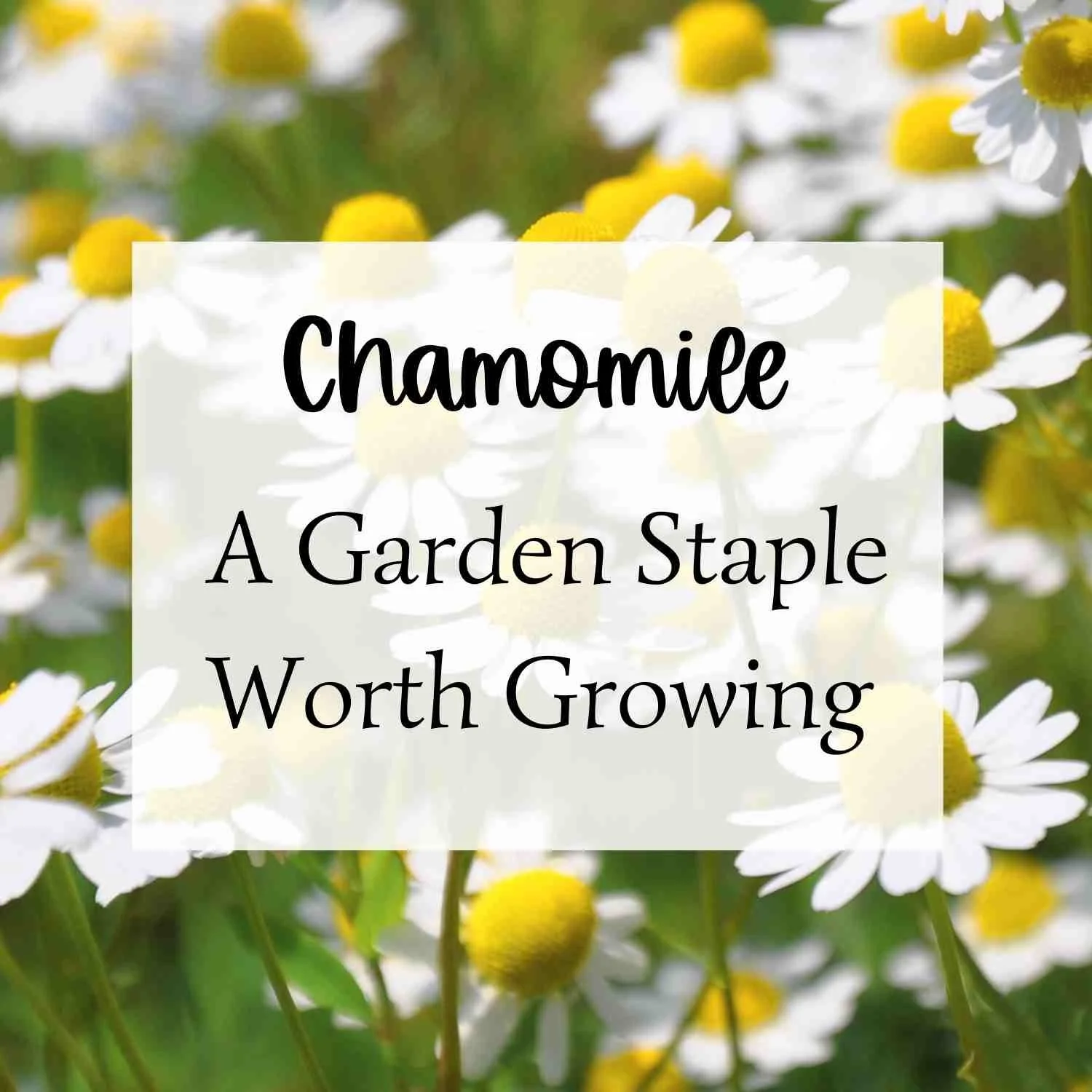
Chamomile is one of those herbs that quietly earns its keep. It’s cheerful in the garden, easy to grow, and useful in ways that make it a true staple for the home herbalist. Those little daisy-like flowers don’t just look sweet—they work hard too.
Chamomile has been used traditionally for generations, especially when it comes to digestion, nervous system support, and gentle care for children. It’s the kind of plant you’re glad you made room for.
Botanical Information
Botanical Name: Matricaria chamomilla
Common Name: German Chamomile
Parts Used: Flowers
Primary Actions
Mild sedative
Gastric anti-inflammatory
Antispasmodic (especially for the gut and gallbladder)
Carminative
Mild bitter
Traditional Uses
Chamomile has long been used for:
Digestive complaints, including IBS, gas, and bloating
Mild anxiety and occasional insomnia
Inflammation of the gastrointestinal tract
Menstrual cramping
Fussy children and infants (including colic)
Topical use for skin inflammation
This is one of those herbs that tends to find its way into daily life without much effort—which is exactly what makes it so valuable.
Chamomile is one of those herbs that earns its place by being flexible. Most people start with a simple tea, which is often used to support digestion, ease nervous tension, or help the body settle in the evening. For those who prefer something more concentrated or shelf-stable, chamomile can also be prepared as a tincture or a glycerite, with glycerites being a particularly nice option for children or anyone avoiding alcohol. Beyond internal use, chamomile shines externally as well. A strong tea can be used as a compress for skin irritation, puffy eyes, or minor burns, or added to bathwater for overall skin support and relaxation. Chamomile steam is another gentle option, often used for sinus congestion or as a calming facial steam. However it’s prepared, chamomile has a way of fitting into everyday life without much fuss—which is exactly why it’s so loved.
How to Grow Chamomile
Chamomile is forgiving. If you forget about it for a day or two, it won’t hold a grudge.
Starting from Seed
Start seeds indoors about 6 weeks before the last frost, or
Direct sow after the last frost
Scatter seeds on the soil surface and do not cover them—they need light to germinate.
Keep soil evenly moist. Germination typically takes 7–14 days.
Once seedlings are a couple inches tall, thin or transplant to allow 6–8 inches of spacing.
Growing in the Ground
Sun: Full sun
Soil: Well-drained, average garden soil
Water: Regular watering, especially in heat—avoid soggy soil
Spacing: 6–8 inches apart
Chamomile reseeds easily. Deadhead to encourage continuous blooms, or let a few flowers go to seed if you’d like it to return next season without asking permission.
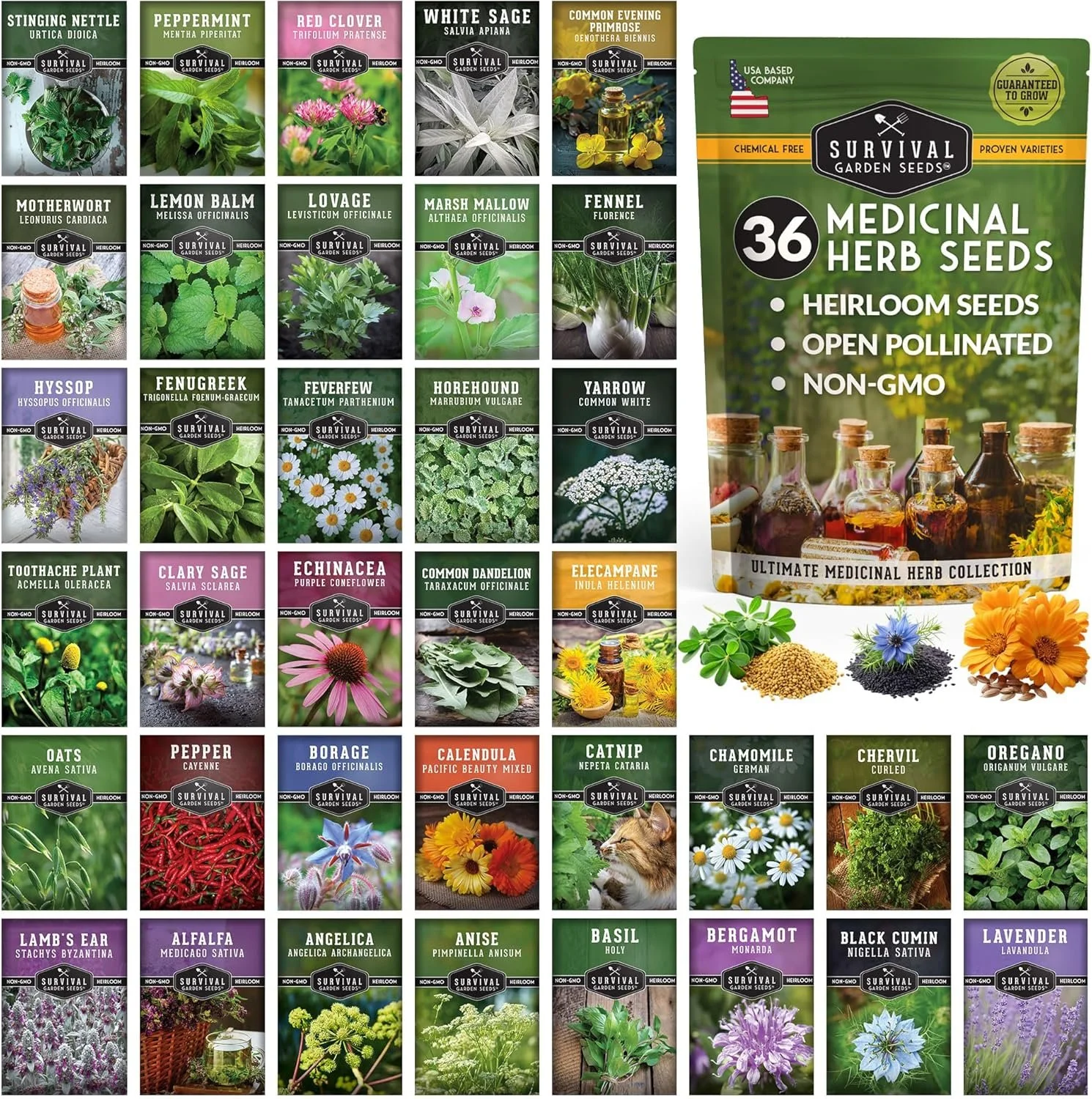
For those building an apothecary garden, I like using a medicinal herb seed variety pack I found on Amazon—it includes chamomile along with other useful herbs like lavender, calendula, and peppermint, so you can start a diverse garden all at once.
Growing in Containers
Container Size: At least 8–10 inches deep and wide
Soil: Light, well-draining potting mix
Placement: Full sun on a patio, porch, or sunny windowsill
Watering: Let the top inch of soil dry out before watering again
Container-grown chamomile is a great option if garden space is limited—or if you like keeping herbs close at hand.
Harvesting & Drying Chamomile
Chamomile flowers are best harvested when they are fully open but before the petals begin to droop, which is when their aroma and usefulness are at their peak. The flower heads can be snipped with scissors or gently pinched off by hand, depending on what’s easiest in the moment. After harvesting, spread the flowers in a single layer in a dry, shaded area with good airflow and allow them to dry completely. Once dry, store them in an airtight container away from heat and light. Your future tea jar will thank you.
Want the Full Apothecary Garden Growing Guide?
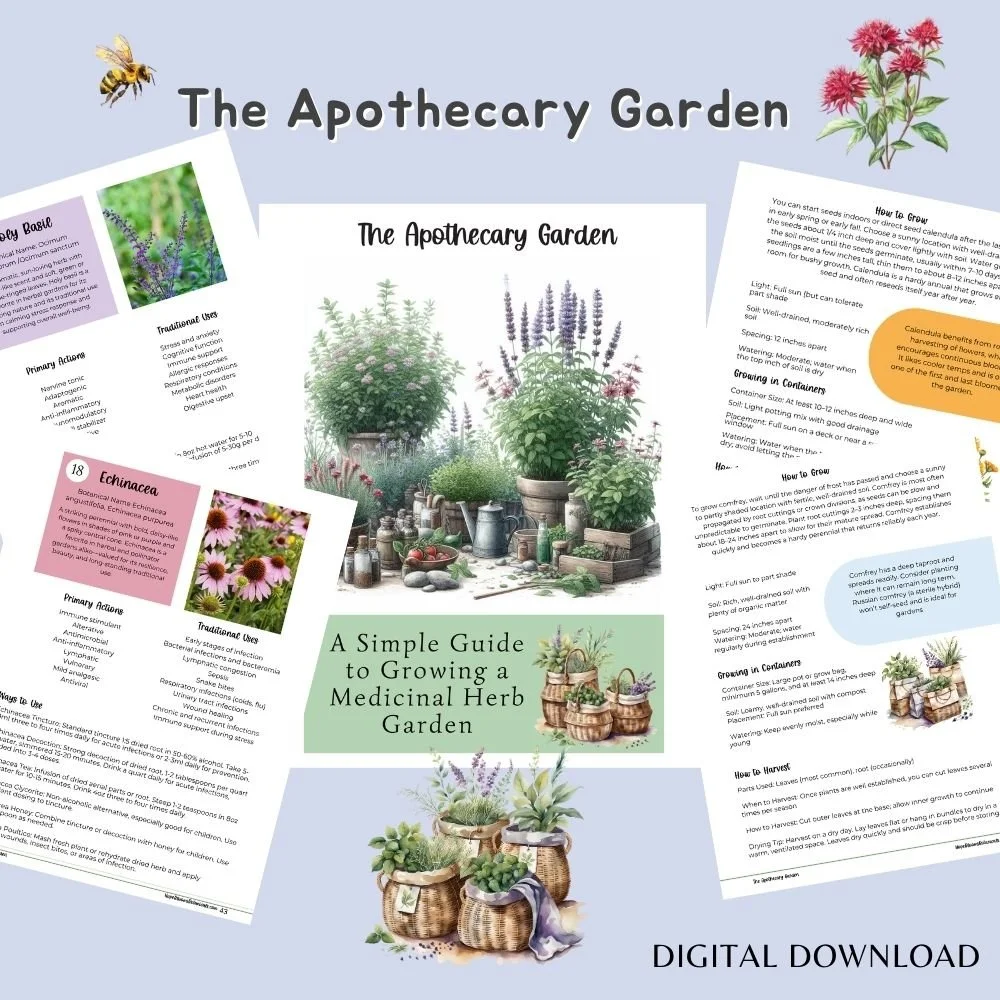
The Apothecary Garden Growing Guide
If you’re looking for a clear, practical guide that walks you through how to grow, harvest, and use 20 medicinal herbs, my Apothecary Garden Growing Guide brings everything together in one place. I originally made this guide for myself. I printed it, put it in sleeve protectors, and still use it throughout the growing season—from seeding and watering to harvest. It’s my quick, reliable reference that I reach for again and again.